
PRP therapy has become one of the most talked-about treatments in aesthetic medicine — and for good reason. Celebrities swear by it. Dermatologists recommend it. And beauty enthusiasts from Mumbai to Delhi can’t stop raving about it. But what exactly is PRP therapy, how does it work, and should you try it? Let’s break it down — scientifically, honestly, and completely.
What Is PRP Therapy? (Platelet-Rich Plasma Explained)
PRP stands for Platelet-Rich Plasma. The most fascinating thing about this treatment is that it comes entirely from you — your own blood, your own biology, your own healing power.
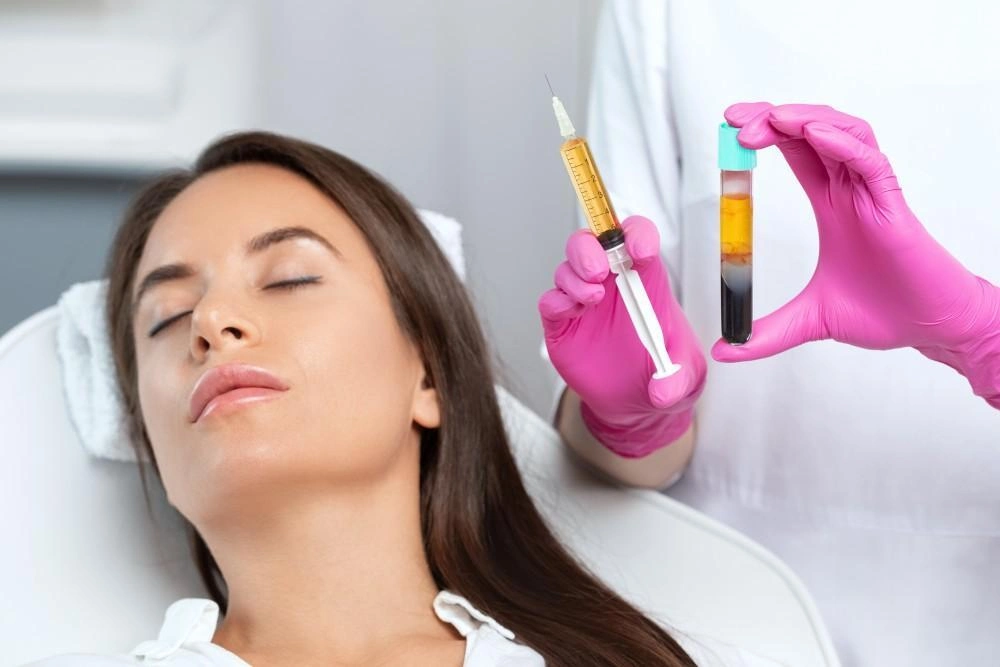
Here is how it works: a small amount of blood is drawn from your arm — exactly like a routine blood test. This sample is placed into a centrifuge, a machine that spins at high speed to separate the components of your blood. What remains is plasma that is highly concentrated with platelets and growth factors — substances your body naturally uses to repair tissue and stimulate cell regeneration. This platelet-rich plasma is then reintroduced into targeted areas of your skin or scalp using fine needles or microneedling. The result? Your body’s own repair mechanisms kick into overdrive — right where you need it most.
The Science Behind PRP — Why It Actually Works
Platelets are tiny blood cells whose primary job is to initiate healing. When you cut yourself, platelets rush to the wound and release growth factors — proteins that signal surrounding cells to multiply, rebuild collagen, and restore tissue. PRP therapy essentially hijacks this process and redirects it to where you want it most: your skin or your scalp.
The growth factors in PRP include PDGF (Platelet-Derived Growth Factor), VEGF (Vascular Endothelial Growth Factor), and TGF (Transforming Growth Factor). Together, they stimulate collagen synthesis, improve blood circulation to the treated area, and accelerate cellular turnover. This is why PRP is clinically effective — it works with your body’s existing biology, not against it.
PRP for Skin — The Vampire Facial and What It Can Do For You
Also known as the Vampire Facial, PRP skin treatment has become one of the most sought-after facial rejuvenation procedures in India. When applied to the face, PRP stimulates collagen production deep within the dermis — the second layer of your skin where structural support originates.
Over a series of sessions, you will see:
- Firmer, tighter skin with improved elasticity
- Reduction in fine lines and early wrinkles
- Improved skin texture and smoothness
- Brighter, more even skin tone
- Significant improvement in acne scarring and post-acne marks
- Natural-looking radiance — the kind no highlighter can replicate
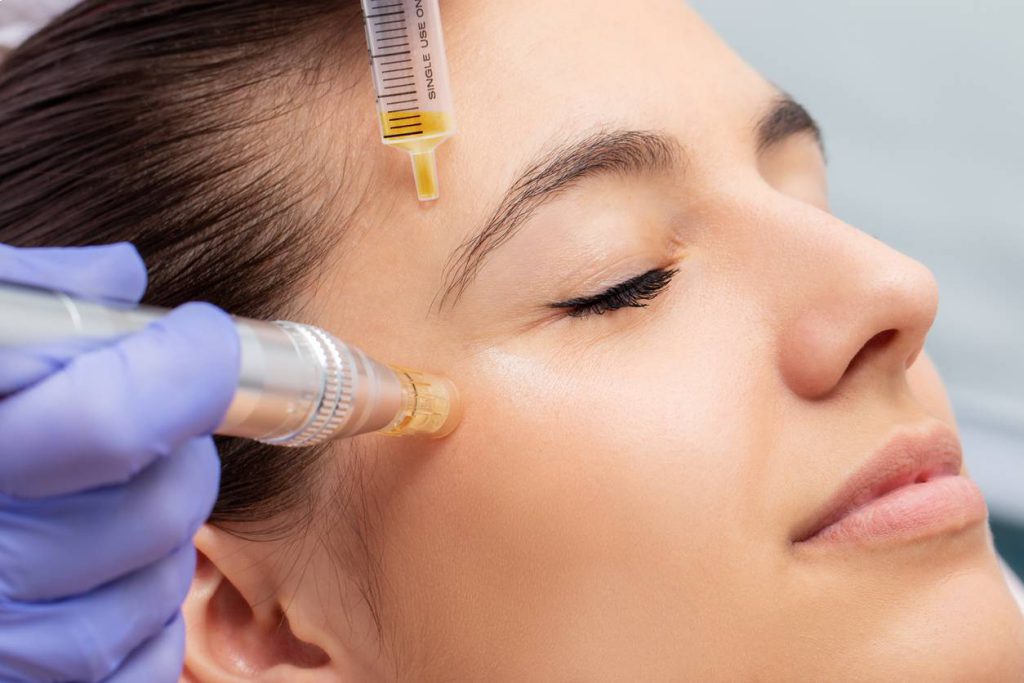
PRP for the face is particularly effective for those dealing with dullness, uneven skin tone, early signs of ageing, or stubborn acne scars that have not responded well to topical treatments. It works across all Fitzpatrick skin types — including darker Indian skin tones — without the pigmentation risks that some laser treatments carry.
PRP for Hair Loss — Does It Really Work?
If you are noticing a widening hair parting, thinning temples, or a receding hairline, PRP Hair treatment could be the turning point your hair has been waiting for. PRP for hair loss works by delivering concentrated growth factors directly into the scalp, right at the level of the hair follicles.
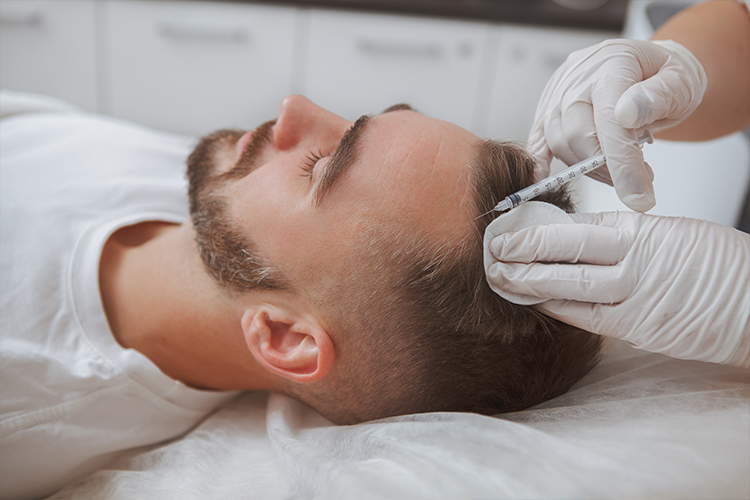
These growth factors do two critical things:
- They strengthen existing hair strands — making them thicker, denser, and more resistant to breakage
- They reactivate dormant follicles — hair follicles that have slowed down or stopped producing hair due to hormonal changes, stress, or genetic factors
Clinical studies on PRP for hair loss show measurable improvement in hair density and thickness, particularly in cases of androgenetic alopecia (pattern baldness) and alopecia areata. At ISAAC Luxe, we have seen consistent results across both male and female patients dealing with diffuse thinning, post-partum hair loss, and stress-induced shedding.
PRP is not a cure for hair loss — but it is one of the most effective non-surgical tools available to slow it down, reverse early-stage thinning, and restore density over time.
Is PRP Therapy Safe? Side Effects, Downtime and What to Expect
PRP’s safety profile is one of its greatest strengths. Because the plasma is derived from your own blood, the risk of allergic reactions or immune rejection is virtually nonexistent. There are no synthetic chemicals, no foreign substances, and no anaesthesia required for most applications.
What you may experience after a PRP session:
- Mild redness or warmth at the injection sites — typically resolves within a few hours
- Minor swelling, especially around the eyes if treating the under-eye area — settles within 24 hours
- Slight tenderness on the scalp after a hair PRP session — lasts 1 to 2 days
- Very rarely, minor bruising at the blood draw site
Most clients return to their normal routine the same day. There is no surgery, no stitches, no lengthy recovery period. For people with busy schedules — and that includes most Mumbaikars and Delhi professionals — this is a significant advantage over surgical alternatives.
How Many PRP Sessions Do You Need? Results Timeline
PRP therapy is a progressive treatment. Unlike injectables or fillers that show immediate results, PRP works with your biology — which means results build gradually and naturally over time.
Typical PRP protocol at ISAAC Luxe:
- Initial course: 3 to 6 sessions, spaced 4 weeks apart
- Visible improvement: usually noticeable after sessions 2 to 3
- Optimal results: 3 to 4 months after completing the initial course
- Maintenance: 1 session every 4 to 6 months to sustain results
For hair loss, patients typically notice a reduction in shedding first (around weeks 6 to 8), followed by new growth becoming visible from month 3 onwards. For skin, texture and radiance improvements are often visible after the first session, with collagen-driven firmness building steadily over the course.
Who Is an Ideal Candidate for PRP Therapy?
PRP works across a wide range of skin and hair concerns, and is suitable for both men and women. You may be an ideal candidate if you:
- Are noticing early signs of facial ageing — fine lines, loss of firmness, dullness
- Have acne scarring or uneven skin texture you want to improve
- Are experiencing diffuse hair thinning, a widening parting, or early-stage hair loss
- Prefer natural, minimally invasive treatments over surgery or injectables
- Want results that look natural and build gradually rather than an overnight transformation
- Have tried topical products without satisfactory results
PRP is generally not recommended for individuals with active skin infections, platelet disorders, those on anticoagulant medications, or those with very advanced hair loss where follicles are no longer viable. A proper consultation will determine your suitability.
PRP vs Other Treatments — How Does It Compare?
One of the most common questions we hear at ISAAC Luxe is how PRP compares to other popular aesthetic treatments. Here is a quick, honest breakdown:
PRP vs Botox
Botox relaxes facial muscles to reduce expression lines — it does not improve skin quality or hair. PRP improves collagen, texture, and tone — it does not address deep expression wrinkles. They are complementary, not competing treatments. Many of our clients use both.
PRP vs Fillers
Fillers restore lost volume and are immediate in effect. PRP improves skin quality and stimulates your own collagen over time — there is no added volume, only improved firmness. Again, these work very well together.
PRP vs Minoxidil for Hair Loss
Minoxidil is a topical solution that needs to be applied daily and works only as long as you continue using it. PRP provides a course of treatment with results that can last months after completing the sessions. For many patients, PRP provides superior long-term outcomes — especially for those who find daily topical application inconvenient or ineffective.
PRP vs Mesotherapy for Hair
Mesotherapy also involves scalp injections but uses a cocktail of vitamins and minerals rather than your own blood. PRP is considered more natural as it uses autologous (your own) plasma. Both are effective — your dermatologist can advise which is better suited to your specific type of hair loss.
PRP Therapy at ISAAC Luxe — What Makes Us Different
At ISAAC Luxe, PRP is not a procedure we rush through. Every PRP session begins with a detailed consultation and skin or scalp assessment. Our dermatologists personalise the protocol — the number of sessions, concentration of PRP, and application method — based on your specific concern, skin type, and goals.
What sets our approach apart:
- PRP performed only by qualified dermatologists — never by unqualified staff
- FDA-approved centrifuge equipment for precise PRP preparation
- Personalised session plan — not a one-size-fits-all protocol
- Combination protocols available — PRP + Microneedling, PRP + Mesotherapy, PRP + Hair Transplant recovery
Available across our clinics in Delhi, Mumbai, Bengaluru, Gurugram, Noida, Hyderabad, and Surat