
Your skin doesn’t need to be perfect it just needs the right care to bring its natural glow back.
There are days when your skin feels dull no matter how much skincare you use. Dark spots stay stubbornly in place, acne leaves behind reminders, and uneven texture can make you feel like your skin has lost its natural freshness. This is where a chemical peel treatment can make a difference.
Chemical peels are professional skin treatments designed to exfoliate damaged outer layers of the skin and encourage the appearance of smoother, brighter, and more even-looking skin. But with different strengths and formulations available, understanding the treatment before opting for one is important.
What is a Chemical Peel Treatment?
A chemical peel is a professional treatment in which a carefully selected chemical solution is applied to the skin to remove or loosen damaged outer layers. As the skin naturally renews itself, the treated area can appear smoother, clearer, and more refreshed.
A chemical peel treatment for skin can be customised depending on your skin type and concerns. It may be recommended for issues such as pigmentation, acne, acne marks, uneven skin tone, rough texture, sun damage, fine lines, and dull-looking skin.
The key is choosing the right peel rather than assuming that a stronger peel will always produce better results.
What Are the Benefits of Chemical Peel Treatment?
One of the reasons chemical peels have become a popular professional skincare treatment is their versatility. Depending on the peel selected, potential benefits may include:
- Smoother and more refined-looking skin texture
- Reduction in the appearance of pigmentation and dark spots
- Improvement in uneven skin tone
- Brighter and fresher-looking skin
- Support in managing certain types of acne
- Reduction in the appearance of post-acne marks
- Improvement in the appearance of fine lines
- Healthier-looking overall skin texture
While a peel can improve the appearance of several skin concerns, results vary from person to person. Your skin condition, the type of peel used, and your aftercare routine all play a role.
What are the Different Types of Chemical Peels?
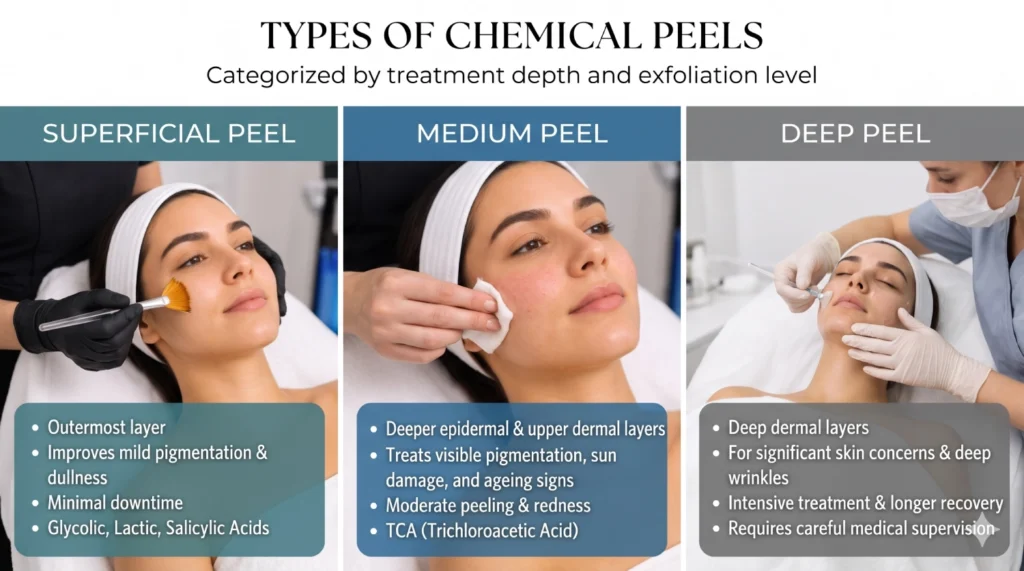
Not every peel works in the same way. The types of chemical peels are generally categorised according to how deeply they exfoliate the skin.
Superficial Chemical Peel
A superficial peel works mainly on the outermost layer of the skin. It is often used to improve mild pigmentation, dullness, uneven texture, and overall skin brightness. It typically involves minimal downtime compared with deeper peels.
Medium Chemical Peel
A medium peel works deeper into the skin and may be considered for concerns such as more noticeable pigmentation, sun damage, and certain signs of ageing. Recovery can involve more visible redness and peeling.
Deep Chemical Peel
Deep peels penetrate further and are generally used for more significant skin concerns. Because they involve a more intensive treatment and longer recovery, they require careful professional assessment and supervision.
Common peeling agents include glycolic acid, salicylic acid, lactic acid, and trichloroacetic acid (TCA), depending on the treatment plan.
Can Chemical Peels Help With Acne?
Yes, certain peels may be used as part of an acne-focused skincare plan. A chemical peel for acne can help exfoliate dead skin cells and may improve the appearance of clogged pores, active acne, and post-acne marks.
However, acne is not the same for everyone. The cause, severity, sensitivity, and current condition of your skin need to be considered before choosing a peel. This is why professional assessment is important instead of trying strong peeling solutions at home.
What Happens During a Chemical Peel Treatment?
The process is relatively straightforward, but every step matters.
First, a professional assesses your skin and discusses your concerns. Your skin is then cleansed and prepared before the selected peel solution is carefully applied.
You may experience mild tingling, warmth, or stinging while the solution is on the skin. Depending on the peel, it may then be neutralised or removed, followed by soothing and protective skincare.
The entire appointment can vary depending on the type of peel and treatment area, but many treatments can be completed within an hour.
Chemical Peel Recovery and Aftercare
The recovery period depends largely on the depth of the peel. With a superficial peel, you may experience mild dryness or flaking. Stronger peels can cause more noticeable peeling, redness, or sensitivity.
During recovery, protecting your skin is essential. Your professional may recommend:
- Applying sunscreen regularly
- Keeping the skin moisturised
- Avoiding harsh exfoliants
- Avoiding picking or peeling the skin
- Temporarily reducing the use of irritating skincare ingredients
- Following the recommended aftercare routine
That last point is especially important. A treatment may be performed in a single appointment, but how you care for your skin afterwards can significantly influence the recovery experience.
When Will You See Chemical Peel Results?
You may notice your skin looking fresher or brighter as it begins to recover, but results are not always immediate. Improvements in pigmentation, acne marks, texture, or fine lines may become more noticeable over time.
Some people may benefit from a single session, while others may require multiple treatments based on their skin concerns and professional recommendations.
Patience matters. Skin renewal is a process, not an overnight transformation.
How Much Does a Chemical Peel Treatment Cost?
The cost of a chemical peel can vary considerably. Factors such as the type and strength of the peel, treatment area, number of sessions, clinic, and professional expertise can all influence the price.
Instead of choosing a treatment based solely on cost, it is worth considering whether the peel is appropriate for your skin and whether it is being performed under proper professional guidance.
Why Choose a Professional Clinic for Chemical Peels?
There are many clinics offering chemical peel treatments, including Isaac Luxe, where the focus can be on understanding the skin concern before recommending a suitable treatment approach.
A professional clinic can assess your skin, determine which type of peel is appropriate, guide you through the procedure, and provide aftercare recommendations. This personalised approach is particularly important when treating concerns such as acne, pigmentation, or sensitive skin.
After all, your skin deserves more than a one-size-fits-all solution.
Conclusion
Clearer, smoother-looking skin doesn’t always mean adding another product to your shelf. Sometimes, it means understanding what your skin actually needs.
A chemical peel can be an effective professional treatment for concerns ranging from dullness and uneven texture to pigmentation and acne. The right peel, however, depends on your individual skin not simply on what is trending.
So before choosing a peel, take the time to understand your skin, consult a professional, and choose a treatment plan that puts skin health first and results second.
_________________________________________________________________________
Frequently Asked Questions About Chemical Peel Treatment
Is a chemical peel painful?
You may experience mild tingling, warmth, or stinging during the procedure. The sensation depends on the type and strength of the peel.
How long does chemical peel recovery take?
Recovery varies depending on the peel. Superficial peels generally have minimal downtime, while deeper peels can require a longer recovery period.
How many chemical peel sessions are needed?
It depends on your skin concern, the type of peel, and your desired results. A professional can recommend a suitable treatment schedule after assessing your skin.
Is a chemical peel safe for all skin types?
Chemical peels can be suitable for many skin types, but the type and strength of the peel should be selected carefully by a qualified professional.