
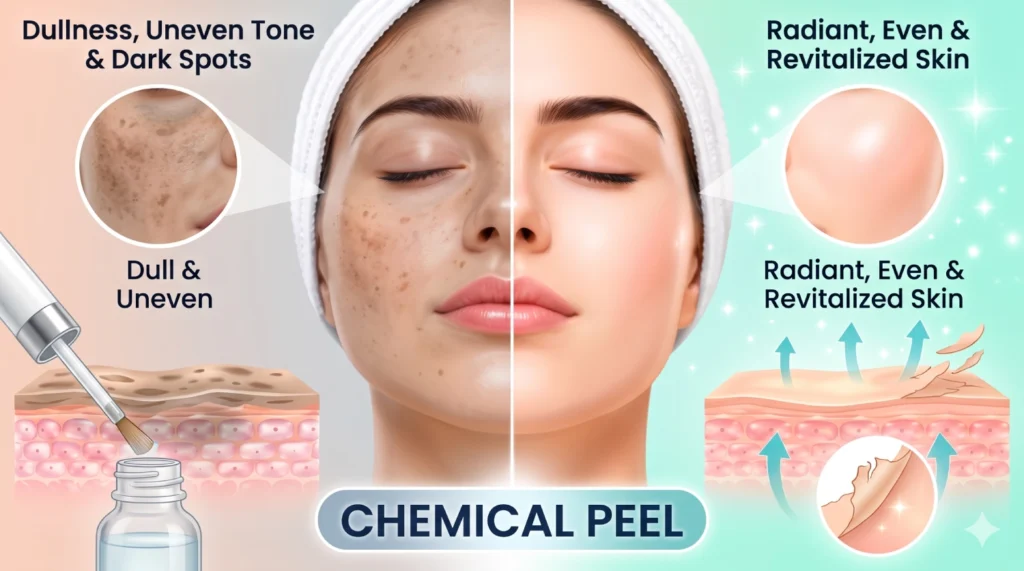
Your skin can look tired even when you aren’t. Dullness, uneven tone and those stubborn dark spots can slowly take away the glow you once had. Sometimes, your regular skincare routine may not be enough to address these concerns. This is where a chemical peel for skin can offer a more targeted approach.
A chemical peel is a professional treatment that uses carefully selected acids to exfoliate damaged or dead skin cells and reveal smoother, fresher-looking skin underneath. But can it actually help with dullness, uneven tone and dark spots? Let’s take a closer look.
What Is a Chemical Peel for Skin?
A chemical peel is a skin treatment in which a specially formulated solution is applied to the skin for controlled exfoliation. Depending on the formulation and strength, it can work on different layers of the skin and address specific concerns.
Chemical peels may help improve the appearance of:
- Dull skin
- Uneven skin tone
- Dark spots and pigmentation
- Rough skin texture
- Mild acne and congestion
- Certain signs of sun damage
The right peel, however, depends on your skin type, sensitivity and the concern being treated.
Chemical Peel for Dull Skin
Dull skin can happen for several reasons, including the buildup of dead skin cells, sun exposure, dehydration and environmental factors. When these dead cells accumulate on the surface, your complexion can appear tired and lacklustre.
A chemical peel for dull skin helps exfoliate this buildup, allowing newer-looking skin to become more visible. Ingredients such as glycolic acid and lactic acid are commonly used in superficial peels to improve the appearance of dullness and promote a smoother-looking complexion.
The goal isn’t to make your skin unnaturally bright overnight, but to gradually support a fresher and more even appearance.
Chemical Peel for Uneven Skin Tone
Uneven skin tone can appear as areas of different pigmentation across the face. Sun exposure, post-acne marks and other forms of pigmentation can all contribute to an uneven complexion.
A chemical peel for uneven skin tone can help by exfoliating pigmented and damaged surface cells. Depending on the cause and severity of pigmentation, a professional may recommend ingredients such as glycolic acid, lactic acid or other formulations suited to your skin.
Consistency and proper aftercare are important, as pigmentation can sometimes return when the skin is exposed to excessive sunlight.
Chemical Peel for Dark Spots
Dark spots can be particularly frustrating because they often remain even after the original acne or irritation has disappeared. These marks may develop due to sun exposure, inflammation or post-acne pigmentation.
A chemical peel for dark spots may help improve their appearance by encouraging controlled exfoliation and skin renewal. However, not every dark spot is the same, and the cause of pigmentation should be considered before selecting a treatment.
This is why professional assessment matters. Choosing a stronger peel simply because you want faster results isn’t always the best approach for your skin.
What Should You Expect After a Chemical Peel?
Depending on the type and strength of the peel, you may experience mild redness, dryness, tightness or peeling. Your skin may need a few days to recover, particularly after a stronger treatment.
Aftercare usually includes keeping the skin moisturised, using sunscreen and avoiding picking or pulling at peeling skin. Your skincare professional may also recommend temporarily avoiding certain active ingredients.
Why Choose Isaac Luxe?
There are many brands and clinics offering chemical peel treatments, but your skin deserves an approach that considers its individual needs. At Isaac Luxe, chemical peel treatments are approached with personalised care, from understanding your skin concern to selecting an appropriate treatment and guiding you through aftercare.
Whether your concern is dullness, uneven tone or dark spots, the focus should always be on choosing the right treatment for your skin rather than simply choosing the strongest peel.
Give Your Skin the Right Kind of Care
Dullness, uneven tone and dark spots don’t define your skin, and treating them doesn’t have to mean an overly complicated routine. A professionally selected chemical peel can be a targeted option for improving the appearance of several common skin concerns.
The key is simple: understand your skin, choose the right treatment and give it the care it needs afterwards.
Frequently Asked Questions
1. Can a chemical peel help with dull skin?
A chemical peel can help exfoliate dead skin cells that contribute to a dull appearance. Depending on the formulation, it may leave the skin looking smoother, fresher and more radiant.
2. Is a chemical peel good for uneven skin tone?
Chemical peels may help improve the appearance of uneven skin tone by exfoliating damaged and pigmented surface cells. The most suitable peel depends on your skin type and the cause of the uneven pigmentation.
3. Can chemical peels remove dark spots?
Chemical peels may reduce the appearance of certain types of dark spots and pigmentation. Results depend on their cause and depth, so professional assessment is important before selecting a peel.
4. How long does it take to see results from a chemical peel?
Results vary depending on the type of peel, the skin concern and individual skin response. Some people notice a fresher appearance after one treatment, while certain concerns may require multiple sessions.
5. Can I use skincare products after a chemical peel?
Your post-peel routine should be gentle and focused on supporting the skin barrier. Avoiding harsh exfoliants and certain active ingredients temporarily may be recommended, depending on the treatment.