
Ever looked in the mirror and wished your skin could simply hit the “refresh” button? Dullness, uneven texture, pigmentation, and occasional breakouts can make your skin feel less radiant than it once did. While skincare products can certainly help, sometimes your skin needs a little extra support. This is where a chemical peel can come in.
A chemical peel is a professional skin treatment designed to exfoliate the skin and encourage the growth of fresher, smoother-looking skin. But before you consider one, it is important to understand what the treatment actually involves, what it can help with, and what you should expect afterward.
What Is a Chemical Peel?
A chemical peel is a cosmetic skin treatment in which a specially formulated solution is applied to the skin to remove damaged or dead skin cells from its surface. Depending on the formulation and strength, the solution can work at different depths of the skin.
As the treated skin gradually sheds, the newer skin underneath may appear smoother, brighter, and more even in tone.
A chemical peel for skin can be used to address concerns such as dullness, uneven texture, pigmentation, mild acne, and certain signs of sun damage. However, not every peel is suitable for every person. The appropriate treatment depends on your skin type, concerns, sensitivity, and desired results.
How Does a Chemical Peel Work?
Think of your skin as constantly renewing itself. Over time, dead skin cells can accumulate on the surface, contributing to a dull or uneven appearance.
A chemical peel uses carefully selected exfoliating ingredients to loosen and remove these cells. Depending on the type of peel, it may also stimulate processes associated with skin renewal.
The treatment is generally categorised according to how deeply it works:
Superficial Peels
These are the mildest types and primarily affect the outermost layer of the skin. They may be used to improve mild dullness, uneven tone, and surface texture, with relatively little recovery time.
Medium Peels
These penetrate further into the skin and may be considered for concerns such as more noticeable pigmentation, uneven texture, and certain signs of sun damage. Recovery can be more noticeable than with a superficial peel.
Deep Peels
These reach significantly deeper layers of the skin and are used for specific, more pronounced concerns. Because they involve greater intensity and recovery, they require careful professional assessment and supervision.
What Can a Chemical Peel Help With?
One of the reasons chemical peels have become popular is their versatility. Depending on the formulation selected, they may help improve the appearance of:
- Dull or tired-looking skin
- Uneven skin tone
- Certain types of pigmentation and dark spots
- Mild acne and clogged pores
- Uneven skin texture
- Mild acne scarring
- Fine lines
- Some signs of sun damage
It is important to remember that a peel is not a universal solution. Results can vary depending on the individual’s skin, the type of peel used, and how consistently they follow the recommended skincare routine afterward.
What Happens During a Chemical Peel Procedure?
If you are considering a peel for the first time, knowing what happens can make the experience feel much less intimidating.
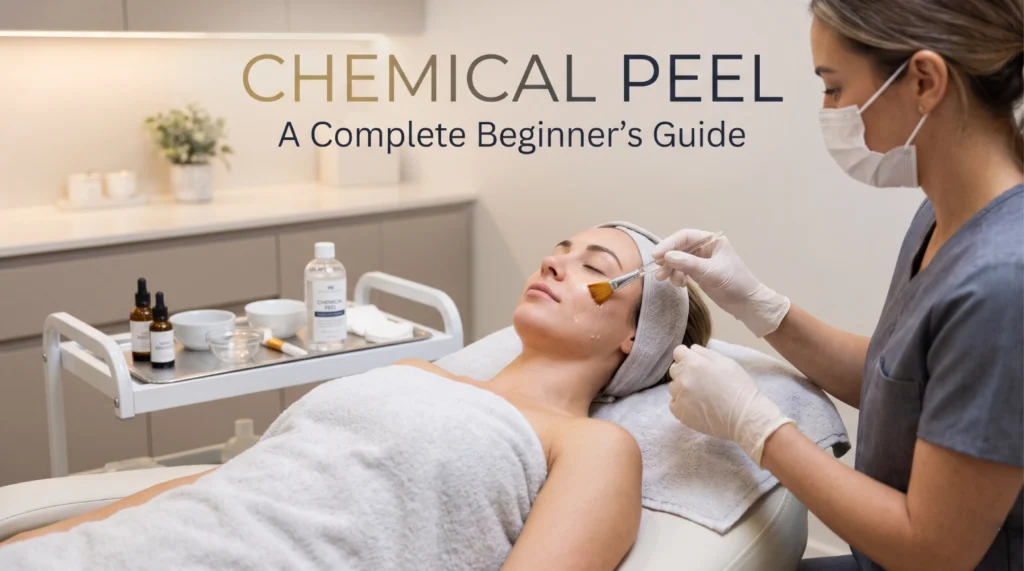
The chemical peel procedure generally begins with a consultation, where a skincare professional assesses your skin and discusses your concerns. Your skin is then cleansed and prepared before the selected solution is carefully applied.
You may experience sensations such as mild tingling, warmth, or stinging while the product is on the skin. The exact sensation depends on the formulation and strength of the peel.
Once the treatment is complete, the solution is removed or neutralised as appropriate, and soothing skincare products may be applied.
The entire process is usually relatively quick, but the treatment itself is only one part of the experience. What you do after the appointment is equally important.
What Should You Expect After a Chemical Peel?
Your skin may appear slightly red or feel sensitive immediately after treatment. Depending on the type and strength of the peel, you may also experience dryness, flaking, or peeling over the following days.
This is why patience is important. It can be tempting to touch, scrub, or peel away flaking skin when you want to see the final result sooner. However, allowing your skin to recover naturally is essential.
Your skin may gradually begin to look smoother, fresher, and more radiant as it recovers.
Chemical Peel Aftercare: What Should You Do?
Good chemical peel aftercare can make a significant difference to your recovery. Your skincare professional should provide instructions based on the treatment you received, but some general principles include:
- Keep your skincare routine gentle.
- Use a moisturiser to support the skin barrier.
- Apply broad-spectrum sunscreen regularly.
- Avoid unnecessary sun exposure.
- Do not pick or manually remove peeling skin.
- Avoid harsh scrubs and exfoliating products while your skin is recovering.
- Be cautious with potentially irritating active ingredients unless your skincare professional advises otherwise.
Most importantly, listen to your skin. If something feels unusually uncomfortable or your skin develops a concerning reaction, seek professional advice rather than trying to manage it yourself.
Is a Chemical Peel Suitable for Everyone?
Not necessarily. Although chemical peels can be beneficial for many people, the treatment should be selected according to individual skin needs.
If you have active irritation, an infection, certain skin conditions, a history of problematic scarring, or are using particular medications or skincare ingredients, you may require additional assessment before treatment. Pregnancy, breastfeeding, and other individual circumstances should also be discussed with a qualified professional.
This is why choosing a treatment based solely on what worked for someone else may not be the best approach.
Choosing the Right Chemical Peel for Your Skin
There is no single peel that is automatically “the best.” The right option depends on what you want to address and how your skin is likely to respond.
A professional can consider factors such as your skin type, sensitivity, pigmentation, acne concerns, previous treatments, and overall skin condition before recommending an appropriate approach.
If you are exploring professional skincare treatments, many clinics and aesthetic brands offer chemical peel treatments, including Isaac Luxe, where treatments can be selected based on individual skin concerns and goals. A professional-led approach can help ensure that the treatment is appropriate for your skin rather than simply following a one-size-fits-all trend.
Final Thoughts
A chemical peel is more than simply applying a solution to your face. It is a controlled exfoliation treatment that can help refresh the appearance of your skin when the right formulation and approach are used.
For beginners, the most important thing is not to chase the strongest treatment or expect overnight transformation. Healthy-looking skin takes time, and professional guidance, realistic expectations, and proper aftercare all play an important role.
If you have been considering a chemical peel for skin, start by understanding your skin and speaking with a qualified professional. Sometimes, giving your skin the right kind of care is all it needs to rediscover its natural-looking glow.
_________________________________________________________________________
FAQs
1. What is a chemical peel and how does it work?
A chemical peel is a professional skin treatment that uses a specially formulated solution to exfoliate damaged or dead skin cells. Depending on its depth, it can improve the appearance of texture, tone, pigmentation, and dullness.
2. Is a chemical peel safe for the skin?
Generally, chemical peels can be safe when the appropriate treatment is selected and performed correctly by a qualified professional. The ingredients, concentration, skin type, and depth of the peel can influence both results and potential risks.
3. What skin concerns can a chemical peel help with?
Chemical peels can be useful for several common skin concerns, including dullness, uneven tone, pigmentation, rough texture, certain types of acne, fine lines, and sun-related skin changes. The results depend on individual skin needs and treatment type.
4. Does a chemical peel hurt?
Most people describe the sensation as mild warmth, tingling, or stinging rather than significant pain. However, the experience can vary depending on the formulation and strength. Your skincare professional can guide you through what to expect.
5. How long does a chemical peel treatment take?
A typical superficial peel can be completed relatively quickly, although the appointment length varies. Factors such as skin preparation, the treatment area, type of peel, and individual requirements can influence the overall duration.