
Dullness, uneven skin tone, acne marks, pigmentation and rough texture can sometimes make your skin feel like it has lost its natural glow. And while skincare products can help, some concerns may need a more targeted approach. This is where chemical peel treatment comes in.
But there isn’t just one type of chemical peel. From gentle superficial peels to stronger treatments, each one works at a different depth and is suited to different skin concerns. Understanding the types of chemical peels can help you know what to expect and why a professional may recommend one peel over another.
What Is a Chemical Peel?
A chemical peel is a professional skin treatment that uses a specially formulated solution to exfoliate the skin. It helps remove damaged or dead skin cells from the surface, encouraging fresher and smoother-looking skin.
Depending on the formulation and strength, a chemical peel can help improve concerns such as:
- Acne and clogged pores
- Uneven skin tone
- Pigmentation
- Sun damage
- Rough skin texture
- Dullness
- Fine lines
The important thing to remember is that chemical peels are not one-size-fits-all. The right peel depends on your skin type, concerns, sensitivity and the depth of treatment required.
Types of Chemical Peels Based on Treatment Depth
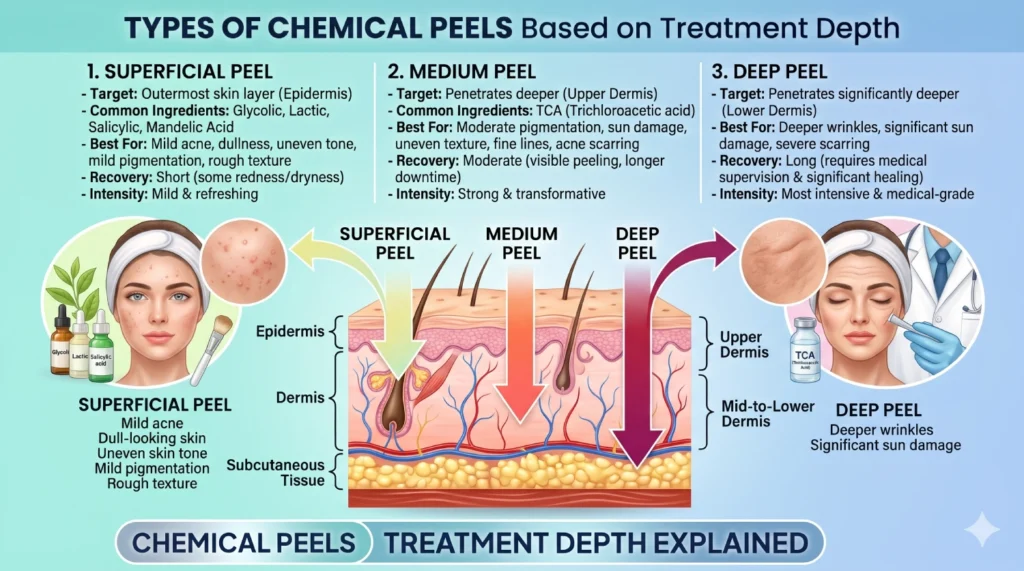
Chemical peels are generally divided into three categories: superficial, medium and deep peels.
1. Superficial Chemical Peels
Superficial peels work mainly on the outermost layer of the skin. They are generally milder and are often used to refresh the skin and address mild concerns.
Common ingredients include glycolic acid, lactic acid, salicylic acid and mandelic acid.
They may be recommended for:
- Mild acne
- Dull-looking skin
- Uneven skin tone
- Mild pigmentation
- Rough texture
Because they are less intensive than deeper peels, recovery is usually shorter. However, some redness, dryness or peeling may still occur depending on the formulation and your skin’s response.
2. Medium Chemical Peels
Medium peels penetrate deeper into the skin than superficial peels and are generally used for more noticeable skin concerns.
Trichloroacetic acid (TCA) is one ingredient commonly used in medium-depth peels.
A medium chemical peel may be considered for concerns such as:
- Moderate pigmentation
- Sun damage
- Uneven skin texture
- Fine lines
- Certain types of acne scarring
Since these peels are stronger, they can involve more visible peeling and a longer recovery period. Professional assessment is particularly important before undergoing this type of treatment.
3. Deep Chemical Peels
Deep chemical peels penetrate significantly deeper into the skin and are much more intensive than superficial or medium peels. They may be used for specific concerns such as deeper wrinkles or significant sun damage.
Because of their strength, deep peels require careful medical supervision and can involve a considerably longer recovery period.
They are not suitable for everyone, and the potential benefits and risks should always be discussed with a qualified professional before treatment.
Types of Chemical Peels Based on Ingredients
Apart from treatment depth, chemical peels can also be classified according to the active ingredient used.
Glycolic Acid Peel
Glycolic acid is an alpha hydroxy acid (AHA) that helps exfoliate the skin. It is commonly used to improve dullness, uneven texture and the appearance of uneven skin tone.
Salicylic Acid Peel
Salicylic acid is a beta hydroxy acid (BHA) that can penetrate into oily pores. Because of this, it is often used for acne-prone and oily skin and can help with clogged pores and breakouts.
Lactic Acid Peel
Lactic acid is another AHA and is often considered a gentler exfoliating option. It may help improve dullness, uneven tone and overall skin texture.
Mandelic Acid Peel
Mandelic acid is an AHA with a larger molecular structure than glycolic acid. It is often used in gentler formulations and may be considered for people looking to address mild acne, uneven tone or texture.
TCA Peel
TCA peels use trichloroacetic acid and can be formulated at different strengths. Depending on the concentration and treatment plan, TCA may be used for pigmentation, uneven texture, fine lines and certain types of scarring.
How Do You Choose the Right Chemical Peel?
Choosing a peel shouldn’t be based simply on which one sounds strongest. Your skin needs the right treatment, not necessarily the most intense treatment.
For example, someone with oily, acne-prone skin may benefit from a salicylic acid peel, while someone dealing with dullness may be recommended a glycolic or lactic acid-based peel.
For pigmentation or more significant texture concerns, a professional may recommend a different formulation or treatment depth.
Your skin type, current skin condition, previous treatments and the concern you’re trying to address should all be considered before choosing a peel.
What Happens During a Chemical Peel Treatment?
During a professional chemical peel treatment, the skin is first cleansed and prepared. The selected peeling solution is then applied according to the treatment plan.
You may experience sensations such as mild tingling, warmth or tightness during the procedure. After the treatment, your skin may appear slightly red or feel dry, depending on the type and strength of the peel.
Over the following days, some peels may cause visible peeling or flaking as the skin goes through its natural renewal process.
Chemical Peel Aftercare: What Should You Do?
Taking care of your skin after a peel is just as important as the treatment itself.
Your practitioner may recommend that you:
- Keep your skin moisturised.
- Apply sunscreen regularly.
- Avoid unnecessary sun exposure.
- Avoid picking or pulling peeling skin.
- Pause harsh exfoliants and active ingredients until advised.
- Follow the specific aftercare routine provided to you.
Following professional aftercare instructions can help support the skin while it recovers.
Are Chemical Peels Safe for Everyone?
Chemical peels can be an effective professional treatment, but they aren’t suitable for every person or every skin concern. Using the wrong strength or formulation can cause excessive irritation and may increase the risk of complications such as burns or changes in pigmentation.
This is why professional skin assessment matters. Instead of choosing a peel based on a trend or social media recommendation, it’s better to understand what your skin actually needs.
Why Choose Professional Chemical Peel Treatment at Isaac Luxe?
When it comes to your skin, personalised care can make all the difference. There are many brands and clinics offering chemical peel treatments, but the right approach begins with understanding your individual skin concerns.
At Isaac Luxe, chemical peel treatments are approached with a focus on professional assessment, suitable treatment selection and proper aftercare. Whether your concern is acne, pigmentation, dullness or uneven texture, the treatment can be planned according to your skin’s individual needs rather than following a one-treatment-fits-all approach.
The Right Chemical Peel Is About Your Skin
The best chemical peel isn’t necessarily the strongest one. It is the one that is appropriate for your skin type, concern and desired outcome.
From gentle superficial peels to more intensive treatments, understanding the different types of chemical peels can help you make a more informed decision. With professional guidance and appropriate aftercare, a chemical peel can be a targeted addition to your skincare journey.
Frequently Asked Questions
1. What are the three main types of chemical peels?
The three main types are superficial, medium and deep chemical peels. They differ mainly in how deeply they penetrate the skin and the concerns they are designed to address.
2. Which chemical peel is best for acne?
Salicylic acid peels are commonly used for acne-prone skin because salicylic acid can help exfoliate inside oily pores. However, the right treatment depends on your acne, skin sensitivity and overall skin condition.
3. Which chemical peel is best for pigmentation?
Glycolic acid, lactic acid and TCA peels may be used for pigmentation depending on its cause and severity. A professional assessment can help determine the most suitable option for your skin.
4. Is a chemical peel suitable for sensitive skin?
Some gentler chemical peels may be suitable for sensitive skin, but this depends on your skin’s condition and sensitivity. Professional evaluation is recommended before choosing a peel.
5. How long does skin take to recover after a chemical peel?
Recovery varies depending on the type and strength of the peel. Superficial peels generally involve less downtime, while medium and deep peels may require a longer recovery period.